Tshisekedi Urges Economic Vigilance as Global Tensions Threaten DRC Mining Sector
DR Congo Moves to Protect Mining Sector and Economy as Global Geopolitical Tensions Rise
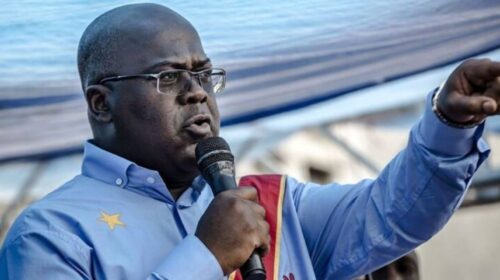
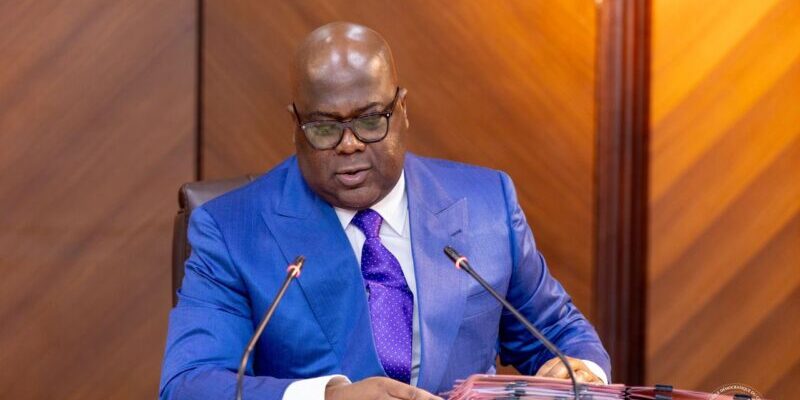
President Félix Tshisekedi has warned members of the government about the potential economic consequences of escalating geopolitical tensions in the Middle East, stressing that global instability could affect the mining-driven economy of the Democratic Republic of the Congo.
The head of state delivered the warning during the 82nd meeting of the Council of Ministers, held on March 13 at the African Union City in Kinshasa.
According to the president, rising geopolitical tensions are already generating volatility in global energy and financial markets, developments that could indirectly affect the Congolese economy particularly the mining sector, which remains the backbone of national exports and public revenues.
Mining Sector at the Center of Economic Concerns
Tshisekedi highlighted several potential risks linked to global instability, including higher energy costs, imported inflation, uncertainty surrounding mining exports, and pressure on public finances and foreign exchange markets.
These factors are particularly critical for the DRC, one of the world’s largest suppliers of strategic minerals such as cobalt and copper, resources essential to the global energy transition.
While the president noted that the country’s macroeconomic fundamentals remain relatively resilient, he stressed that the situation requires heightened vigilance, coordination, and rapid policy responses to shield the economy from external shocks.
The government has therefore been instructed to adopt a proactive strategy aimed at preserving macroeconomic stability, maintaining the competitiveness of the mining sector, and protecting household purchasing power.
Government Measures to Safeguard the Economy
To mitigate potential economic disruptions, President Tshisekedi directed Prime Minister Judith Suminwa Tuluka to oversee the implementation of several measures across key ministries.
Among the priorities:
- The Deputy Prime Minister in charge of the national economy will assess temporary price-control measures for essential goods if global inflationary pressures intensify.
- The ministries responsible for the economy, transport, and entrepreneurship will consult professional organizations to monitor transport tariffs and support small and medium-sized enterprises (SMEs).
- The Ministry of Hydrocarbons, in coordination with finance and budget authorities, will ensure continuous fuel supply and evaluate the reinforcement of strategic national fuel reserves.
- The Ministry of Mines of the Democratic Republic of the Congo will organize consultations with mining companies to evaluate the impact of rising energy costs and maintain stability in mining operations.
- Budget authorities will prepare updated fiscal scenarios for 2026, integrating possible changes in the global economic environment.
- The government will maintain close coordination with the Central Bank of the Congo to protect exchange rate stability and manage foreign currency reserves effectively.
The president also requested that the Prime Minister coordinate these initiatives and submit biweekly reports to monitor their implementation.
Global Tensions and Economic Risks
The warning comes amid heightened geopolitical tensions in the Middle East, including military exchanges between Israel and Iran, as well as strikes involving the United States. These developments have raised concerns about global energy supply disruptions and broader economic instability.
For the DRC, whose economy depends heavily on mineral exports to global markets, fluctuations in energy prices and transportation costs could significantly influence production costs, export revenues, and fiscal stability.
Monitoring Congolese Nationals Abroad
During a previous 81st Council of Ministers meeting on March 6, Prime Minister Judith Suminwa Tuluka also addressed the security situation in the Middle East and its potential implications for Congolese citizens living in the region.
She instructed the Ministry of Foreign Affairs and diplomatic missions to identify Congolese nationals in affected countries and evaluate the capacity of embassies to aid if necessary.
Government spokesperson Patrick Muyaya confirmed that the Prime Minister requested recommendations on additional support measures to ensure that the government can respond effectively should the regional situation deteriorate further.
Protecting a Strategic Economic Pillar
As global uncertainty intensifies, the Congolese government’s priority remains clear: protecting the mining sector, which plays a central role in economic growth, export revenues, and foreign currency inflows.
By strengthening coordination across economic ministries and engaging directly with mining operators, authorities aim to ensure that the country’s vast mineral resources continue to support economic stability and long-term development despite global geopolitical turbulence.